
Game of Fate: Chasing Through Time Patch Notes — June 5, 2026
Aggregated from Steam, cross-tracked with Battle.net coverage on GamePatchNote.
Hello everyone,
As July 7th approaches, our anti-Japanese espionage drama game PatriotMemoirs – Today, We Also Work Hard to Kill Traitors is being polished with full effort. We are striving to refine the work to a sufficiently good level in these final days, to present it to the veteran players and new players who have been eagerly awaiting our work.
As a work with a mainstream, positive energy theme, although our plot and characters are fictional interpretations, many of the deeds and historical figures are based on real historical prototypes – which is a common creative technique for this type of work. We hope the work fits the aesthetic tastes of contemporary users, while also staying true to the core of history. Through this work, we want to help people understand that era, those people, and even personally participate in completing those events! The Tokyo Trial ultimately missed some key culprits.
During the past year of developing Kamikawa Past, we have consulted a vast amount of historical materials, newspapers, and documents, striving to improve the level of detail and authenticity in the creation of many stories. In the coming period, this official account will periodically serialize true historical accounts and information from around 1939 in the occupied areas. These articles are collected from enthusiastic players. Although the content may not be strongly directly related to our work, understanding these background events will greatly help players better appreciate PatriotMemoirs.
We also welcome other players to submit their own writings. If we find them suitable and well-written, we will republish them.Email:
First installment: \ – Author: Anonymous Submission
second installment: \ Author: Doki
Third installment:\ Author: LiuN_刘念
Forth installment:\[Decoding the Shanghai Spy War Archives] Author: LiuN_刘念
Main Text:
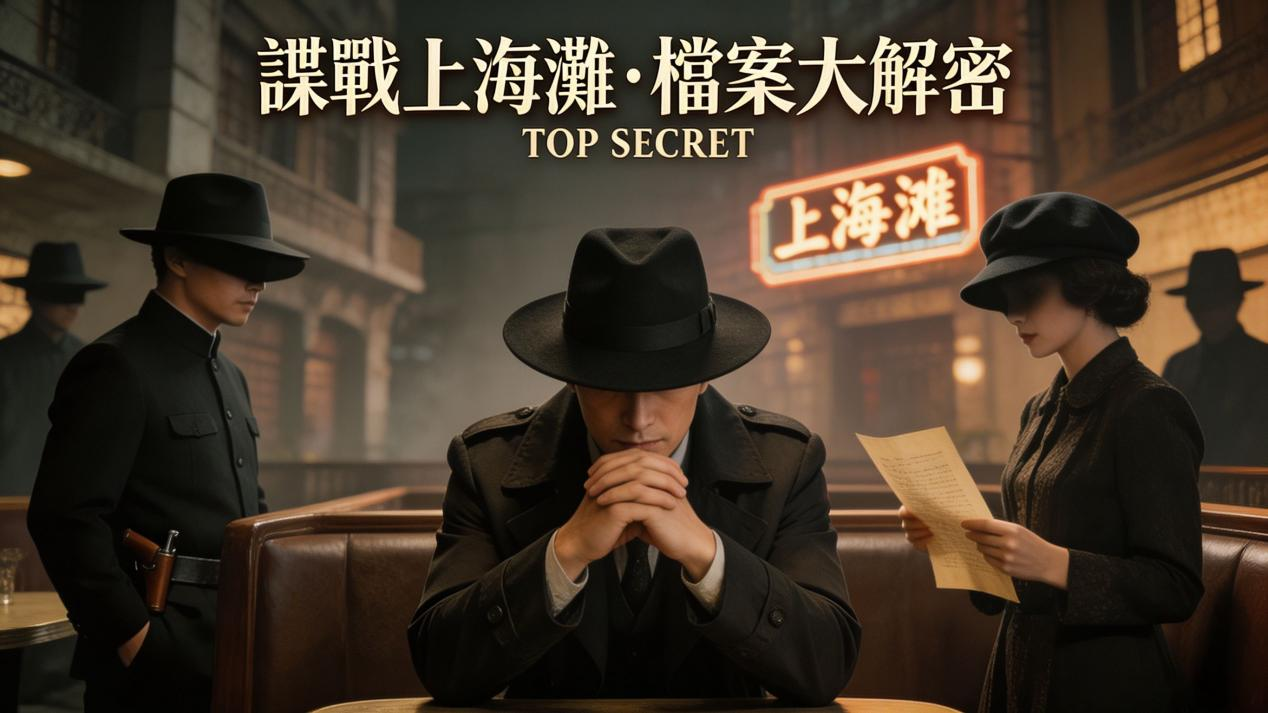
During the War of Resistance Against Japanese Aggression, Shanghai was the most enigmatic battleground of all. Two years after the Battle of Shanghai ended, this greatest metropolis in the Far East had not fallen silent. Instead, it became trapped in an isolated "orphan island" situation characterized by fragmented authority and pervasive espionage.
Outside the foreign concessions, the Japanese military controlled the city's lifelines through force. Inside the concessions, intelligence networks of the Nationalist Government's Military Statistics Bureau (Juntong), the Central Bureau of Investigation and Statistics (Zhongtong), and the Chinese Communist underground all operated in secrecy. Meanwhile, the Japanese-sponsored puppet regimes and their security agencies wove an extensive web of surveillance, arrests, and assassinations across the city.
For this reason, many modern films, television dramas, and games centered on anti-Japanese espionage choose wartime Shanghai as their setting. Their protagonists often take the role of a "multi-faced spy" navigating among rival factions, walking a razor's edge while delivering intelligence and carrying out covert missions. But have you ever wondered what the historical reality was behind the dangerous enemies depicted on screen—the notorious No. 76 Agent Headquarters of the Wang Jingwei regime, the mysterious Japanese Mei Agency, or those seemingly trustworthy "friends" whose identities remain uncertain?
To help players truly immerse themselves in this turbulent era and understand both themselves and their enemies, this article draws upon historical records to reveal the real espionage chessboard of wartime Shanghai. We will examine the three major forces that dominated this isolated city and uncover the true identities of several key historical figures who inspired later portrayals.
I. Hidden in the Mist: What Enemy Regimes Existed in China During the War?
The espionage landscape of wartime Shanghai was extraordinarily complex, with numerous visible and hidden forces competing for influence. To understand this secret history, one must first clarify the structure of the various enemy regimes that coexisted in China during the war.
1. The Japanese Government: The Absolute Core of Colonial Rule
In October 1938, after Japanese forces captured Guangzhou and Wuhan, the war entered a strategic stalemate. Faced with overstretched supply lines, insufficient manpower, and mounting financial burdens, Japan abandoned hopes of a quick military victory. Instead, it adopted a strategy that emphasized political inducement and collaboration while continuing military pressure.
Under this approach, Japan established and supported puppet governments throughout occupied China. These regimes helped administer occupied territories, suppress resistance, divide anti-Japanese forces, and exploit strategic resources.
Japan's administration in occupied China functioned through two parallel systems: a governmental-diplomatic structure and a military intelligence structure. In reality, the Japanese military held ultimate authority over both puppet governments and intelligence organizations.
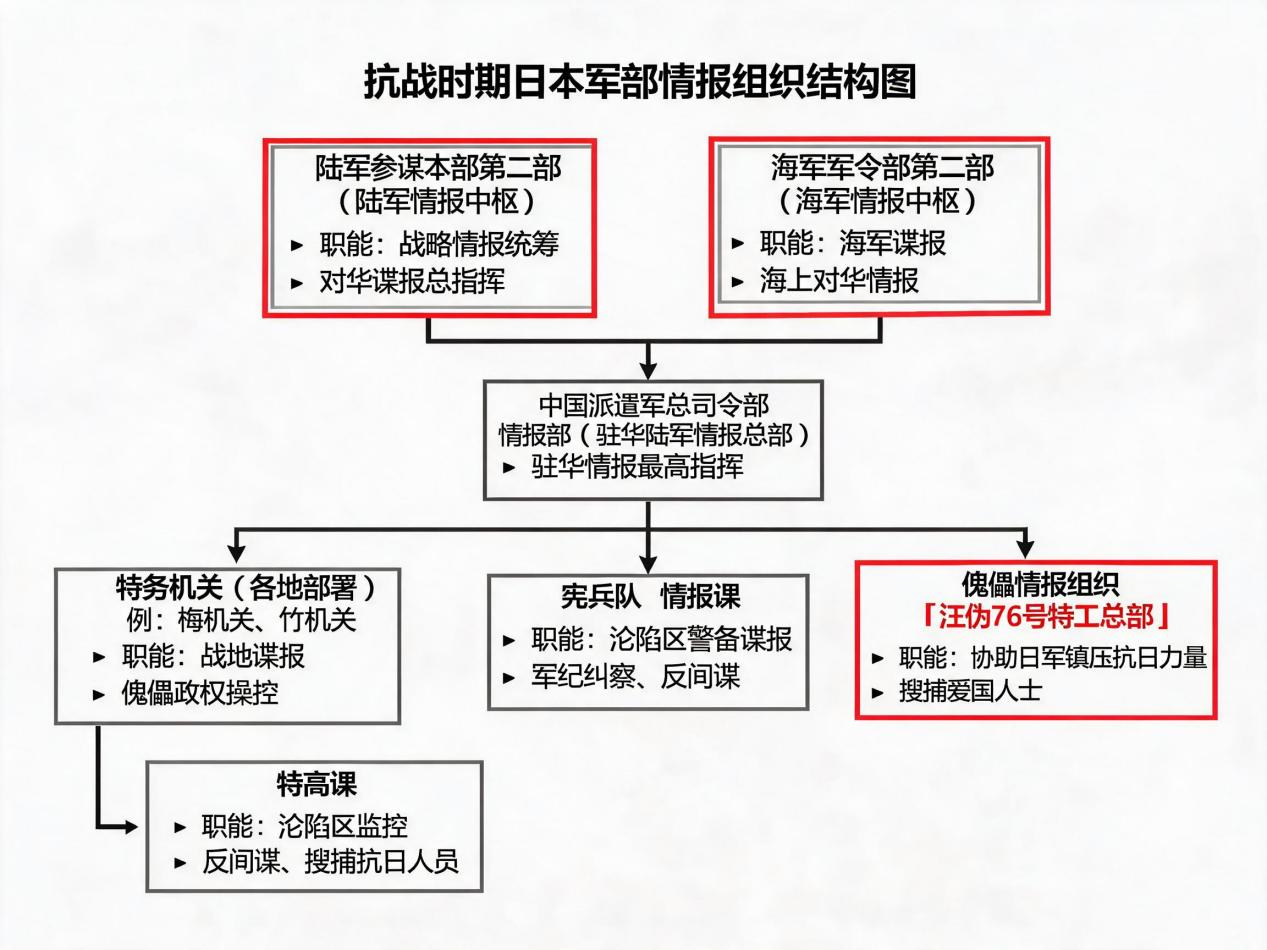
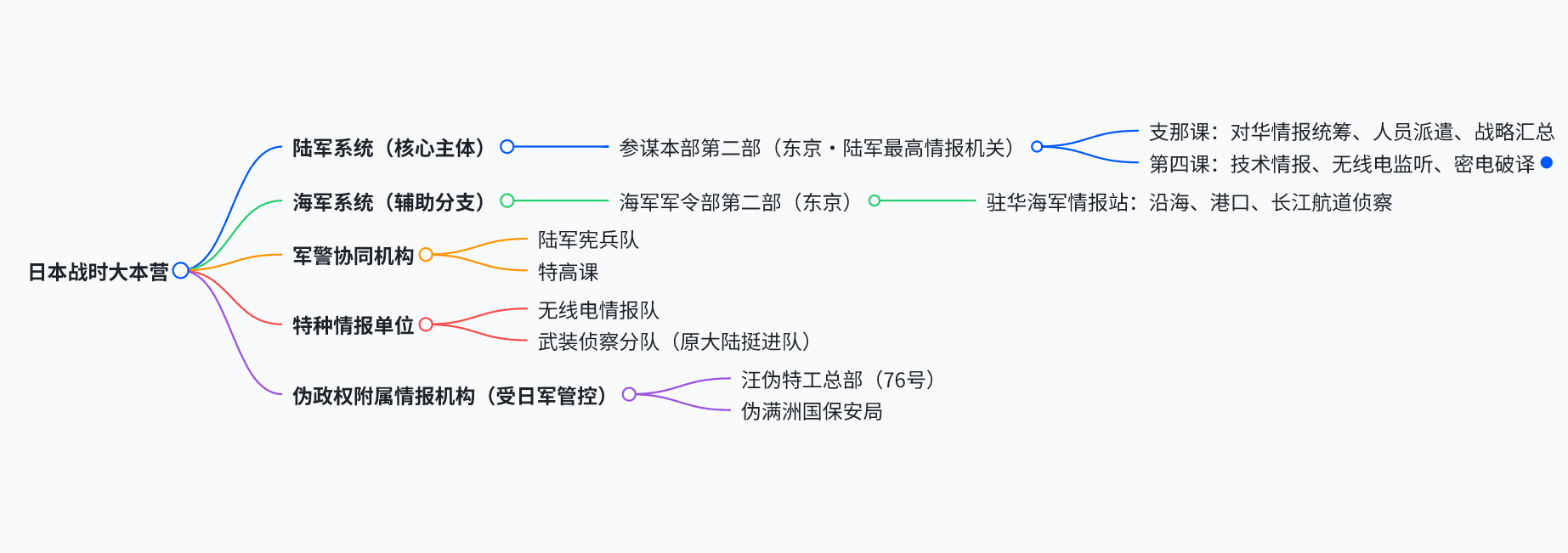
At the highest level stood the Second Bureau of the Imperial Japanese Army General Staff in Tokyo, which coordinated intelligence operations related to China. The China Section oversaw strategic planning, agent deployment, and intelligence collection, while specialized units handled codebreaking and communications intelligence. Supporting this effort was the Naval General Staff's intelligence branch, responsible for coastal and riverine intelligence.
In China itself, intelligence operations were directed by the intelligence departments of the Japanese expeditionary armies. The China Expeditionary Army Headquarters in Nanjing coordinated frontline intelligence, battlefield reconnaissance, political subversion, security administration, and cryptanalysis. Regional intelligence departments in North China, Central China, South China, and Manchuria managed operations within their respective territories.
Military intelligence agencies stationed throughout major cities served as the frontline executors. Their responsibilities included infiltration, surveillance, sabotage, assassinations, recruiting collaborators, and supporting military pacification campaigns.
Additional supporting organizations included the Kempeitai (Military Police), the Tokko (Special Higher Police), radio-interception units, and specialized infiltration teams. These organizations focused on counterintelligence, underground resistance suppression, technical intelligence gathering, and covert operations.
Puppet intelligence agencies such as the Wang regime's No. 76 Headquarters and the Manchukuo Security Bureau possessed little independent authority. They operated under Japanese supervision and served as local instruments for suppressing resistance.
2. The Government of Manchukuo: Japan's First Major Puppet State (1932–1945)
Manchukuo was the first formal puppet state established by Japan in China. Founded in March 1932 and headquartered in Changchun (renamed Xinjing), it governed the entirety of Northeast China.
Compared with later collaborationist governments, Manchukuo possessed even less autonomy. Although Puyi served as its nominal ruler, all significant political, military, and intelligence decisions were ultimately made by the Kwantung Army.
Strategically, Manchukuo functioned as both a defensive buffer against the Soviet Union and a resource extraction base for Japan. Its intelligence agencies focused primarily on gathering information on Soviet military activities and suppressing anti-Japanese resistance movements within Northeast China.
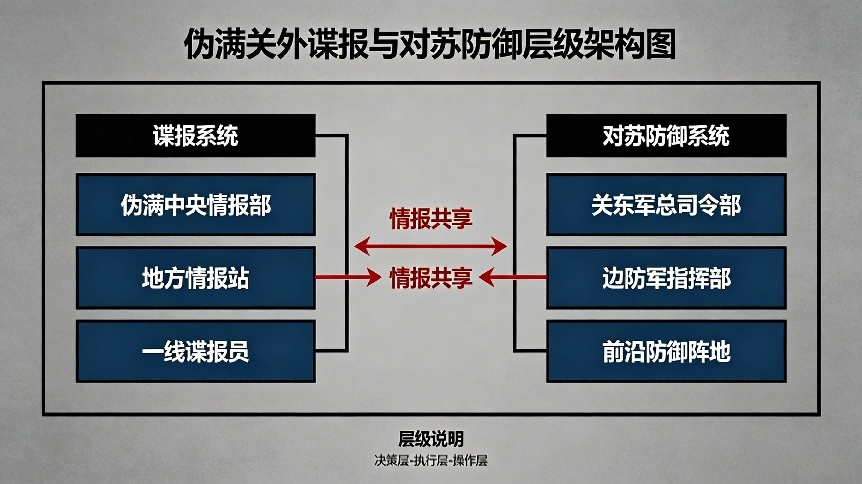
For thirteen years, Manchukuo operated as an extension of the Kwantung Army's intelligence network and formed a crucial component of Japan's northern intelligence system.
3. The Reorganized National Government of Wang Jingwei: A New Puppet Regime in Central China
The Wang Jingwei regime was the central player in Shanghai's wartime espionage environment and remains the primary antagonistic force in many anti-Japanese espionage stories.
On March 30, 1940, under Japanese sponsorship, Wang Jingwei established the Reorganized National Government in Nanjing. It absorbed earlier collaborationist administrations in North and Central China and claimed to be the legitimate successor of the Republic of China.
Unlike Manchukuo, the Wang regime was granted a limited appearance of autonomy. It maintained administrative, military, and judicial institutions modeled after the Nationalist Government and publicly claimed constitutional legitimacy.
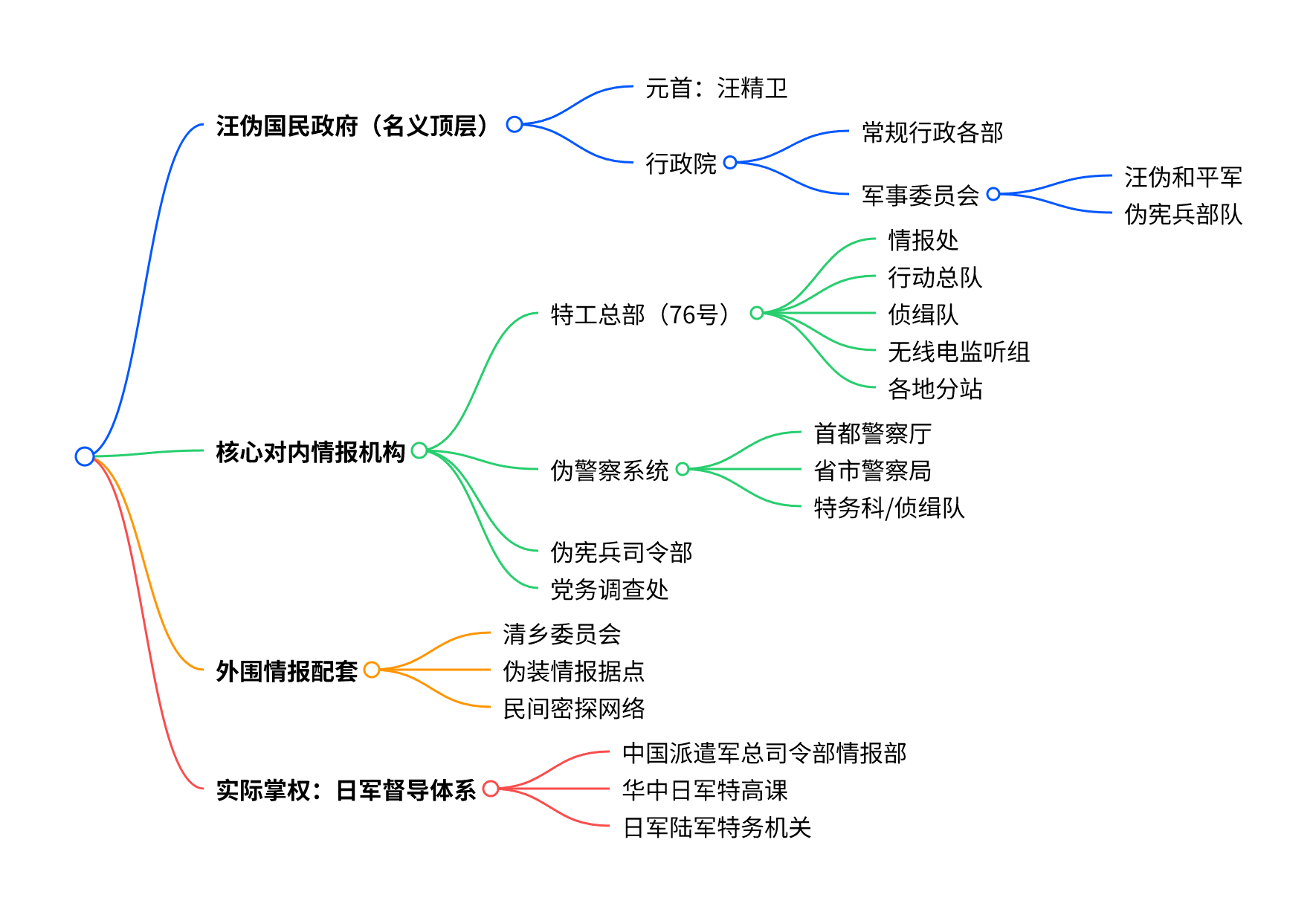
In practice, however, key powers remained firmly under Japanese control, particularly through organizations such as the Mei Agency and the Supreme Military Advisory Mission. The regime's intelligence apparatus focused on suppressing resistance movements, conducting anti-communist campaigns, recruiting defectors from Nationalist intelligence agencies, and weakening anti-Japanese networks.
Consequently, wartime espionage in Shanghai was not simply a conflict between China and Japan. It operated through a dual structure in which Japanese intelligence agencies directed operations from above while collaborationist security organizations carried out actions on the ground.
II. Underlying Currents: The Power Struggle Between the Wang Regime and Japanese Intelligence Agencies
The creation and operation of the Wang Jingwei regime was not merely a story of collaboration. It was the result of a carefully orchestrated combination of intelligence operations and political maneuvering.
Among the Japanese organizations involved, the Mei Agency played the most significant role, transforming the Wang regime into a seemingly legitimate instrument of Japan's war effort. At the same time, Communist and Nationalist intelligence organizations engaged in a deadly struggle against these Japanese and collaborationist security services.
Three major intelligence organizations dominated Shanghai's espionage environment.
1. The Mei Agency: The Power Behind the Throne
The Mei Agency was the highest-ranking intelligence authority responsible for overseeing Shanghai and supporting the Wang regime.
Established in Shanghai's Hongkou District around late 1939 and early 1940 by the Imperial Japanese Army General Staff, the organization derived its codename from the plum blossoms favored by its chief, Lieutenant General Kagesa Sadaaki.
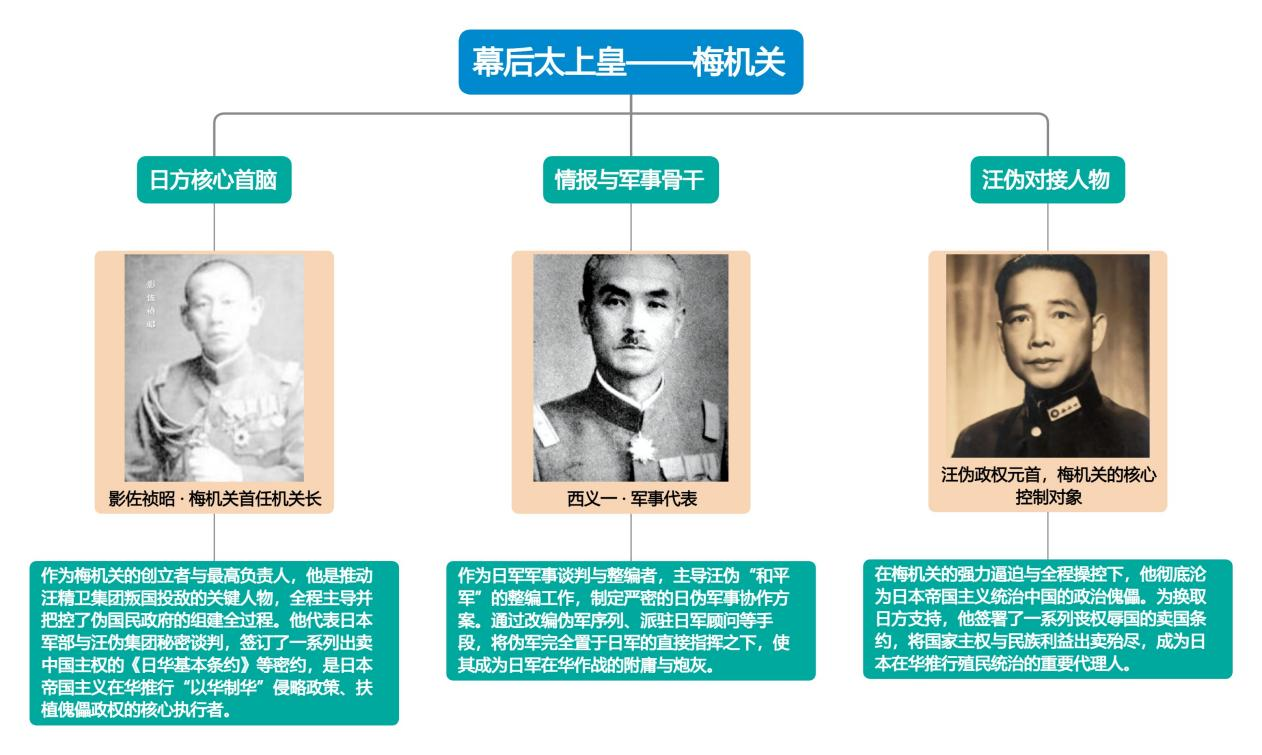
Its principal responsibilities included:
Political supervision of the Wang regime's leadership structure and policies.
Direct command over collaborationist intelligence agencies and approval of major arrests, assassinations, and intelligence operations.
Intelligence collection within Shanghai's foreign concessions and efforts to infiltrate anti-Japanese organizations.
Before the formal establishment of the Wang regime, virtually all major collaborationist intelligence activities in Shanghai were planned and coordinated through the Mei Agency.
2. The Tokko: The Blade of Comprehensive Surveillance
The Tokko, or Special Higher Police, operated under Japanese security authorities and served as a dedicated intelligence and surveillance organization throughout occupied territories.
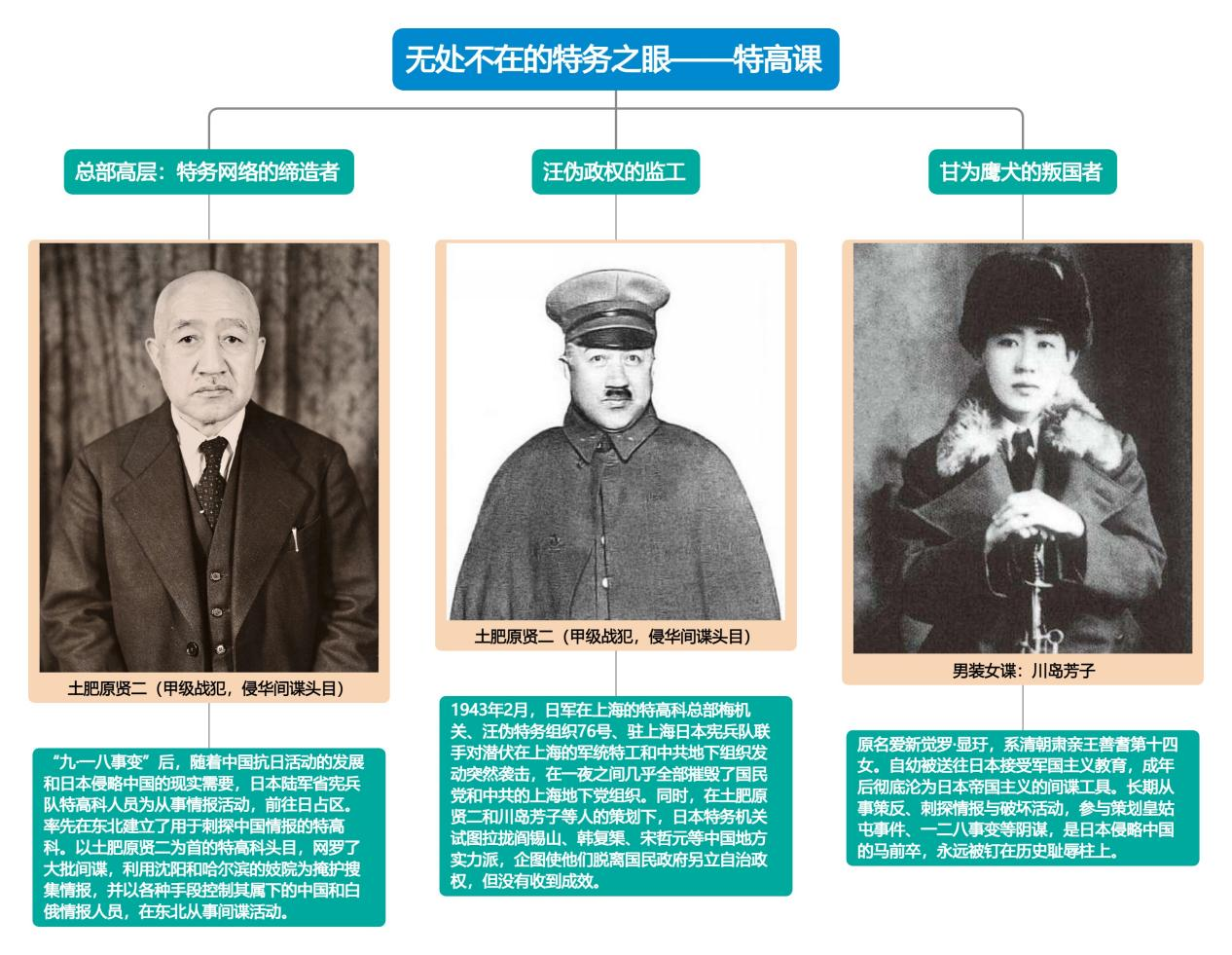
While the Mei Agency focused on political control and strategic direction, the Tokko specialized in ideological monitoring, counterintelligence, and public opinion control.
In Shanghai, its agents monitored intellectuals, students, business leaders, and suspected resistance sympathizers. They also assisted in identifying underground networks and capturing covert operatives.
Together, the Mei Agency and the Tokko formed a comprehensive system of political control and intelligence gathering.
3. No. 76 Agent Headquarters: The Wang Regime's Main Enforcement Arm
Officially known as the Special Agent Headquarters of the Wang Regime's Central Executive Committee, this organization became infamous simply as "No. 76" because of its location at 76 Jessfield Road in Shanghai.
Following Wang Jingwei's arrival in Shanghai in 1939, the organization was established under Japanese sponsorship and the leadership of Ding Mocun and Li Shiqun.
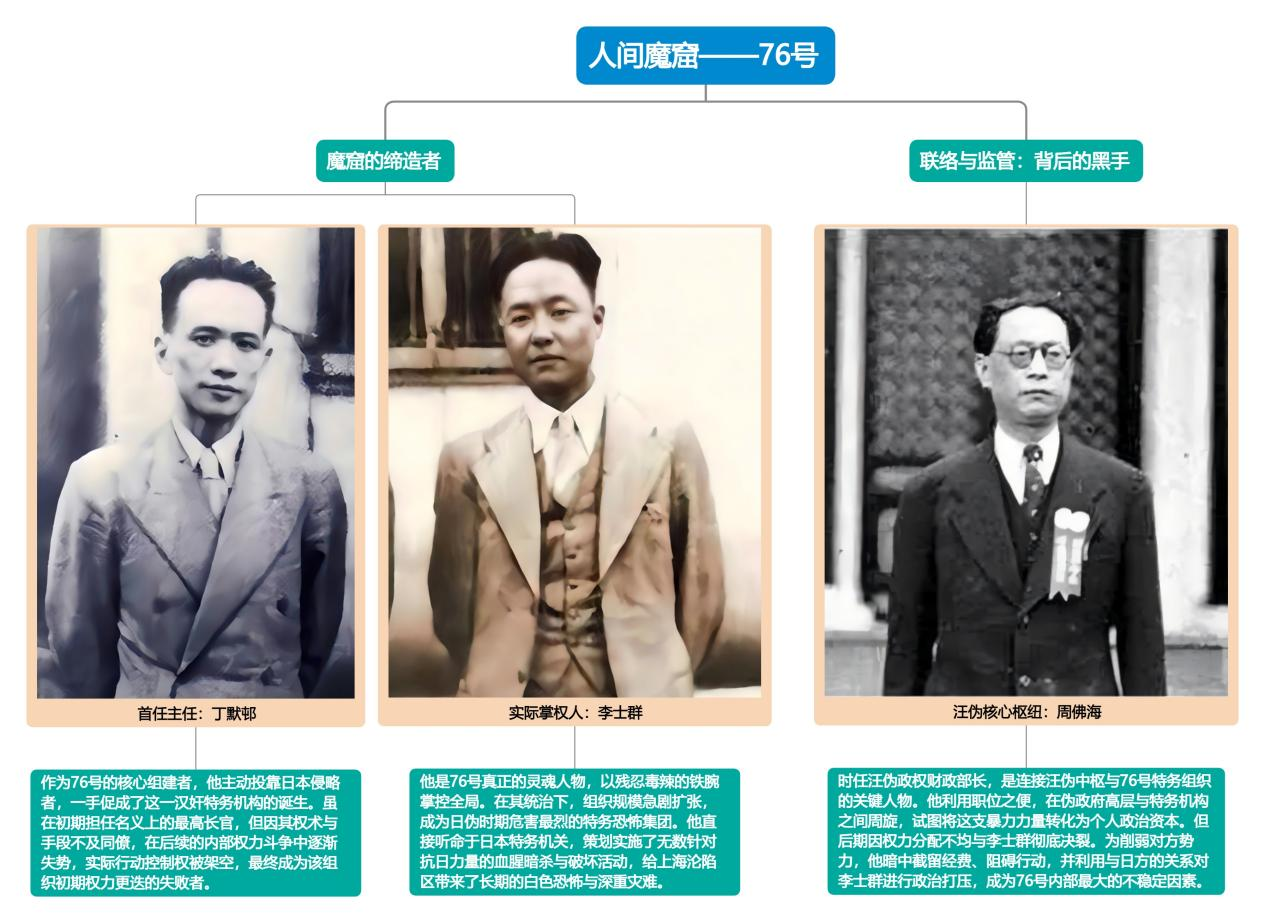
With numerous departments and hundreds of operatives—many of them defectors, opportunists, or criminal elements—it quickly expanded into one of the most feared security organizations in occupied China.
Acting under the direction of the Mei Agency, No. 76 was responsible for:
Arresting Communist underground members and Nationalist intelligence operatives.
Assassinating anti-Japanese activists and public figures.
Destroying underground intelligence networks.
Suppressing political dissent and controlling public opinion.
The years 1939–1940 marked the height of its expansion and brutality, making it one of the greatest threats faced by resistance operatives in Shanghai.
4. Summary
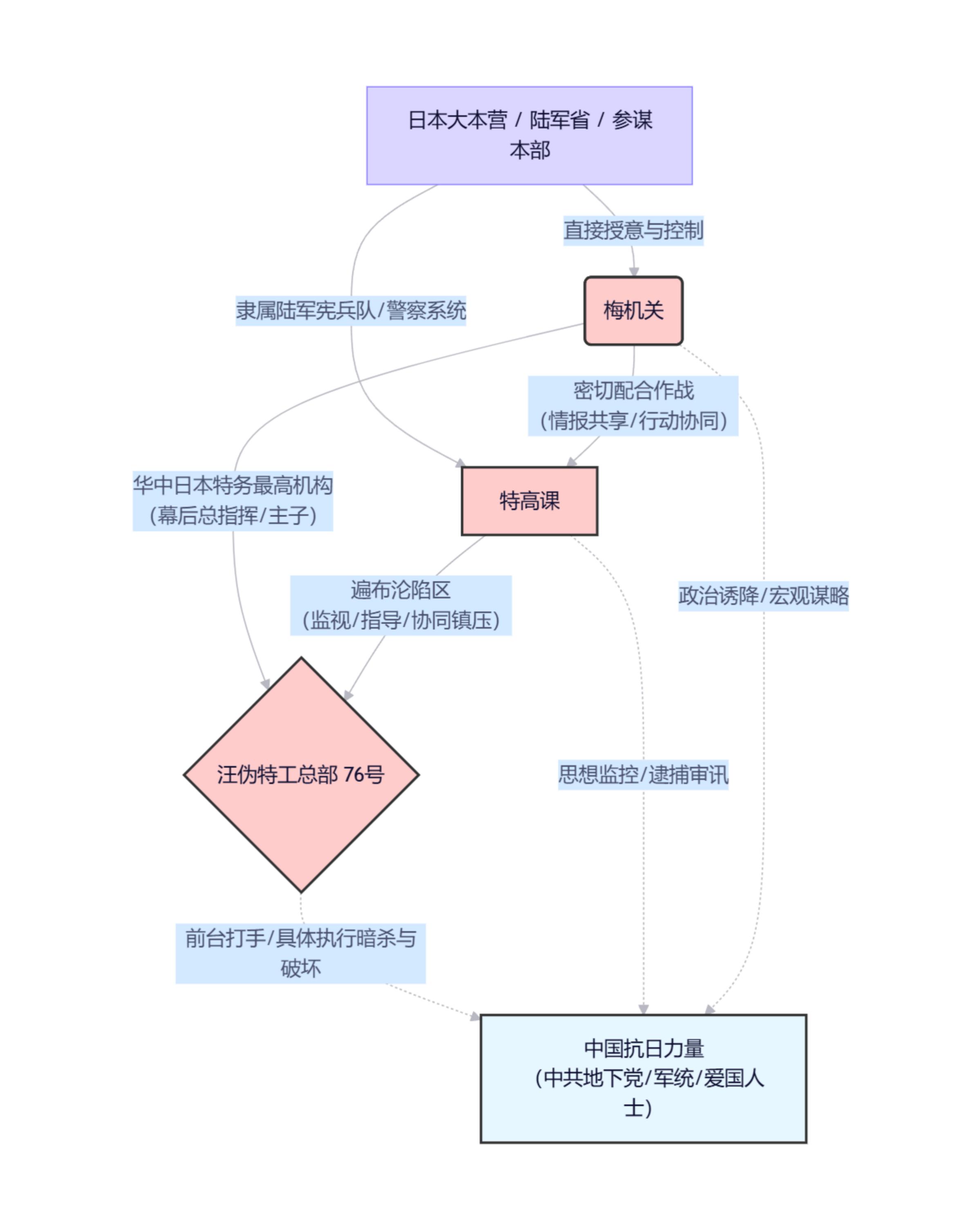
The relationship among these organizations can be summarized as follows:
The Mei Agency served as the supreme Japanese intelligence authority in Central China and acted as the ultimate decision-maker behind the scenes. No. 76 functioned as its collaborationist enforcement arm.
The Mei Agency and the Tokko belonged to different branches of the Japanese security apparatus. The Mei Agency focused on political strategy and management of the Wang regime, while the Tokko specialized in surveillance and intelligence collection.
The Tokko exercised supervisory authority over organizations such as No. 76, maintaining oversight of puppet intelligence agencies on behalf of the Japanese military-security system.
Conclusion
This history reveals a world of complex and ruthless intelligence warfare. Through organizations such as the Mei Agency, Japan carefully engineered and controlled collaborationist governments in an effort to consolidate its occupation of China. At the same time, Communist and Nationalist intelligence operatives fought a relentless covert struggle, providing crucial support to China's resistance effort.
Today, looking back on this turbulent chapter from an era of peace, we remember not only those who sacrificed their lives for national liberation but also the importance of preserving historical truth.
As Chinese Permanent Representative to the United Nations Sun Lei stated during commemorations of the 80th anniversary of the Tokyo Trials:
"History must not be distorted, crimes must not be denied. The verdicts of the Tokyo Trials stand as irrefutable evidence. Any attempt to overturn them is an affront to justice and a threat to peace."
May history serve as our guide, reminding us to cherish peace and safeguard the dignity and future of the Chinese nation.
P.S. The author acknowledges that some interpretations or descriptions may be imperfect due to personal limitations. Readers are welcome to offer corrections and constructive feedback.